The Pint That Changed My Mind
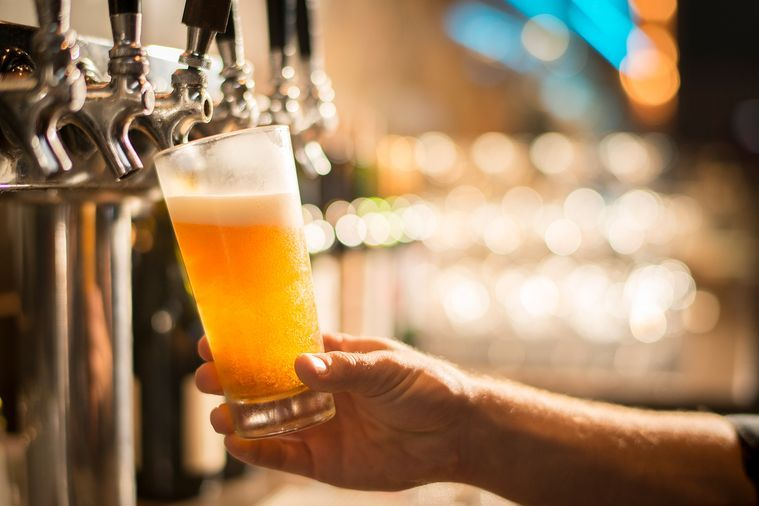
About two years ago, I ordered a beer at a wedding and the bartender slid it across the bar with a look I can only describe as pity, "Your zero, bro..."
It was non-alcoholic. I'd said the wrong beer name, unfamiliar bar, my fault entirely. I took a sip, braced for the usual: that wet-cardboard, watered-down-regret flavour that NA beer was famous for.
It was… good. Annoyingly good. So good that I spent the next ten minutes interrogating the bartender like a detective, convinced he'd swapped my drink.
He hadn't. The category had just quietly gotten its act together while the rest of us weren't looking.
Hold that thought. I'll come back to that bartender.
The numbers nobody saw coming
Here's the thing about trends: the big ones don't announce themselves. They sneak up. And non-alcoholic beer is one of the sneakiest growth stories in the entire drinks industry right now.
Consider this. While total beer volumes have been flat to declining across most developed markets, the no- and low-alcohol category is doing the opposite. The global low- and no-alcohol market was valued at around $27.7 billion in 2025, and it's forecast to nearly double to $53 billion by 2034.
Let me put that another way. A category people wrote off as a punchline is now growing faster than almost anything else behind the bar. Global volumes of no-alcohol drinks grew 9% in 2025 alone, and no-alcohol beer is the single biggest category driving it.
And it's not coming out of nowhere. It's coming out of us.
The sober-curious aren't who you think
When people picture an NA beer drinker, they picture someone who can't drink. The pregnant friend. The designated driver. The recovering.
Wrong.
The single biggest driver of this boom is people who drink perfectly normally, and are simply choosing not to, more often. Look at the UK numbers:
- 44% of UK adults now reach for no- and low-alcohol drinks to moderate their drinking, up from just 31% in 2018.
- 75% of Gen Z said they'd moderated their alcohol intake over the previous six months, edging ahead of millennials at 74%.
- Most NA buyers are substituters, not abstainers. Industry data shows substituters, people who switch between full-strength and no/low depending on the occasion, make up the largest and fastest-growing group, while committed abstainers are actually shrinking.
That last point is the whole game. This isn't a market of people saying "no." It's a market of people saying "not tonight," and wanting something decent in their hand while they say it.
Why it suddenly tastes good
For decades, NA beer was bad for a boring reason: making it is hard. Strip the alcohol out and you strip out body, aroma, mouthfeel, the soul of the thing.
Then the technology caught up. Vacuum distillation that removes alcohol at low temperatures without cooking the flavour. Arrested fermentation. Reverse osmosis. Specialist yeast strains that simply don't produce much alcohol in the first place.
The result: a wave of NA beers good enough to hold their own against full-strength rivals, and the rise of breweries that make nothing but NA, treating it as a craft in its own right rather than a watered-down afterthought.
That's the shift. NA stopped being "beer, minus." It became its own thing.
The trends worth watching right now
If I had to bet on where the next leg of growth comes from, it's these:
- NA goes premium. The fastest growth isn't in cheap lager. It's in craft IPAs, hazy pales, stouts and sours at full premium prices. People will happily pay £4 to £6 for a great NA, because they're comparing it to a cocktail, not to tap water.
- Functional crossover. NA beer is colliding with the wellness world: adaptogens, nootropics, added electrolytes, low-cal positioning. The line between "beer" and "functional drink" is blurring fast.
- The on-trade wakes up. For years you couldn't get a good NA in a pub. That's changing, with more taps, more fridges, and more bartenders who don't slide it over with pity.
- Dry-ish, not dry. Forget Dry January as a one-off. The behaviour is becoming year-round and casual: a few NA nights a week, no big declaration, no identity attached. Quiet, sustainable, and exactly the kind of habit that builds a category.
So, about that bartender
Remember him? The one who handed me the accidental NA beer with a look of pity?
Here's the part I love. I went back to that same bar about a year later. Same guy. And this time, before I could even order, he leaned in and said: "Try the new alcohol-free pale, it's outselling half the proper stuff now."
No pity. Just a recommendation. From the same man who, a year earlier, clearly thought I'd lost a bet.
That's the whole trend in one conversation. Non-alcoholic beer didn't win by convincing the people who can't drink. It won by convincing the people who can, and the bartenders pouring for them.
The pity is gone. What's left is just a good drink, in a growing fridge, in a world that's quietly deciding it doesn't always need the buzz to enjoy the beer.
I'll have another. Without the asterisk this time.
Sources
- Global low/no market valued at ~$27.7bn in 2025, forecast ~$53bn by 2034: Mordor Intelligence and Research and Markets
- No-alcohol volumes grew 9% in 2025; no-alcohol beer the dominant category: IWSR
- 44% of UK adults choosing no/low to moderate, up from 31% in 2018: Drinkaware
- 75% of Gen Z moderated intake over past six months vs 74% of millennials: The Spirits Business
- Substituters the largest and growing group, abstainers shrinking: IWSR